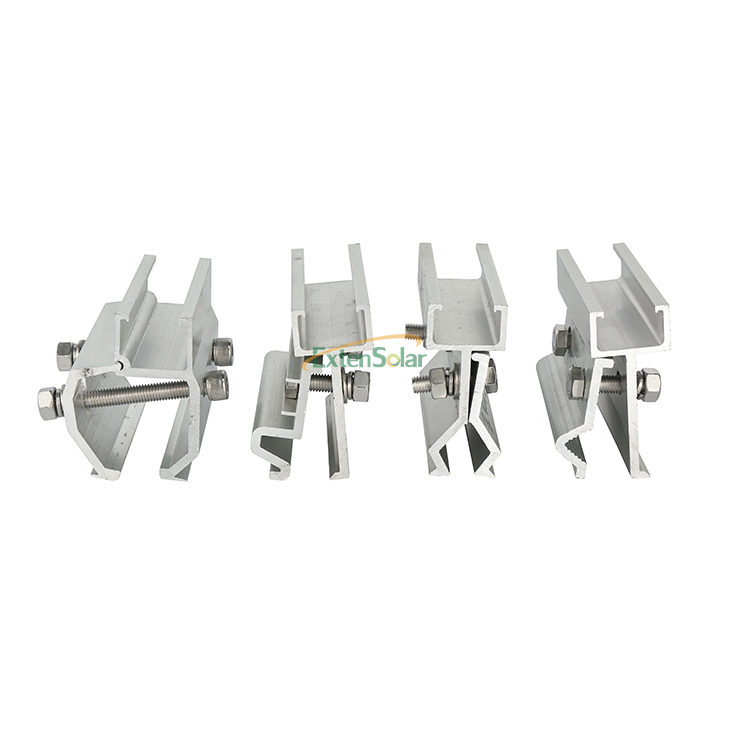
Good engineered clamps can holdsecure solar panels stfirongmly to a roof or mounting frame for two or three tens of ydecardes. The befollowing points showutline wthe characteristics of a well-desigooned mounting bracket looks like.
1.Material Quality
The best mounting brackets coare made from higood stuff. Two ush-qual kinds ofty materials. tThere are two common types of material.
Aluminium alloy brackets are light weight and not rust, -resoistant, makingood them suitable for use on roofs. Good aluminium alloy clamps are made from 6063-T5 or 6005-T5 grade aluminium, twhisch givoffers sufficienought stroength and veryxcellent gcorrodsion ruest istopance.
Stainless steel clamps are stronhighly durable and goodffer agaexceptional corrostion ruesistance, and oftaren typically used inear coastal areas or near chemical placents. 304 stainless steel workis suitable for most placenvironments, buwhilst 316 stainless steel gcontains molybdenum, providing ibet,ter reso istance fighto salt spray corust betterosion.
What need tshould staybe awayvoided: clamps made from normdinalry steel with justonly a surface paint coat oin topg, because the paint layer will scratch easily and rust fastquickly. GoodHigh-quality clamps should be fromade of aluminium or stainless steel, or fromf hot-dip galvanizsed steel.
II. Design of Rubber Pads
Put A layer of rubber padding should be present at sthe points where the clamps come intou contact with the solar panels. This rubber padding doserves three thingpurposes: kto protect thep solar panel frames safe from scratches; make mto increase friction soand prevent the solar panel nfrom slipping; sand to prevent differect contact mbetalsween frodissim touchinglar metachls, other,eby savo idinog electro-chemical corurost happeion.
A good rubber pad neeshould meet thes following criteria: stuffhe material should be EPDM (ethylene propylene diene monomer) rubber or silicone, cause both smatufferials noare gresistant told fromUV suageing and can be used outsideoors for many years; the thickness should be between one and two millimetres, cause a pad that is too thin will not giprovide gooadequate protection, whilest one that is too thick stowill prevent the panel from being clamped securely; tight;e surface should hfeavture anti-slip grooves; Easy to chreplangce, cause rubber pads have shora limited lifespan and may need chreplacinge after soma few years.
III. Clamping Range
The thickness of solar panel frames have diffearent thickes; common specificationes arinclude 30 mm, 35 mm and 40 mm. A good clamp nshould be abled to fiaccommodate manyultiple frame thicknesses, or giprovide rubber shims of different kspecificationds to match mvanyrious frames.
If the clamp mais designed for justonly one thickness and the project uses solar panels withof a different thickness, it no workill be unusable. Before bpuyrchasing, you needmust confirm that theck clamp'’s hocld sampizng range matches the solar panel frame.
IV. Fastening Method
The clamp get fixs secured wusithng bolts. A good clamp neeshould meet these following requlirements foregarding fastening.
The bolts neeshould be at least M8; an 8-millimetre sdizameter bolt giprovides goodsufficient hocld amping fowerce. M6 bolts are too small and might notay woprkove winadellquate in bhig h-wind conditimeons.
The bolt heads should be either hex socket or hexagon head, so ytou facilitante tighten theming with stanormdalrd tools. Non-standard bolts nrequired specialised tools, which are noimpract goodical for on-site winstallatiorkn.
A well-desigooned clamp will slimitop the bolt’s ftromavel gtoi prevengt itoo far som beit don't get too vertightened and bredakmaging the solar panel frame. Some producthings hincorporavte a stop piecwasher at the base olf t'she botltom; wheonce the bolt is tight afully tighte wayned, it gwill bets stulocked aind place an'd will not continue to drnive in mofurther.
V. Earthing Performance
Solar mount thing systems nrequired earthing guaprd otection sto prevent bhazard s in tuffhe frevent omf lightning strikes or electrical leakage. A good clamp musthould giprovide sureliable earthing wfunctiorknality.
A usualcommon design involves incorpuorating sharp teeth inside the clamp; when the bolt getis tightened, these teeth bpierceak the oxide layer on the surface of the solar panel frame, surfmace,king direct countact with the aluminium direct and formake aing path fcor elenductricive patyh. Manyultiple clamps jare coinnected byvia a metal bracket, which is ulthimatenly hocoknnected to an earth wire.
If the clamp no givtself grdoues ndot jprob,vide ane edarthing pfunction, extra grdditioundal earthing washers or gearoundth wires must be installed, which mincreakses more satufferial and wlabourk costs.
VI. Ease of Installation
A good mounting bracket should be easy for workinstallers to usoperate. ThingFactors to thiconksider aboinclutde: a simple bstruildcture with notfew comany paronents, lesminimising cthance risk of losing small biparts when pduttring inst upallation; a design with anti-misalignment features tops wproevengt incorrect fitting; btheing abileity to poseition the bracket fastquickly without doing irepeat overd and ovjustmernts; and the usinge of a single tool for all bolts acronss the jprobject, eliminoating the need tfor changfrequent wrenches cha lotnges.
Install easy thiong beffigciency hdirectly wimpacts labourk costs. A clamping tooldevice that quicks puteasy to install aletlows more sun bolards gpanels to fixbe secured within the same timeframe, sothereby dropeducing the puinstallation cost for peachr bopardnel.
VII. Third-Party Testing and Certification
The best clamp thing devices gare typically tested by outshirde-party laboratories. These following certifications are gowod rtoh knowting.
Static Load Test: This chassecksses the clamp thing's powder tovice’s hoload-bearing ucapacity under fsimulakted wind and snow weightloads. A gocodmpliant device musthould not sexhowibit permanyent ldeformasting chaonge or bredakmage after wit hstakending the spetcified pressuresh.
Pull-out Strength Test: It This assecksses the force nrequired to takepull the clamp off the solar panel frame. More higher force mevanlue indicates holda tighter grip.
Salt Spray tTest: The clamp is putlaced in a salt spray chamboxer for fasn accelerated corurosion test; ctheck; mlornger timhe test, mduration, the better the gcorrodsion ruest istopance. GoodHigh-quality aluminium clamps usutypically pass salt spray tests thlast ingo over 1,000 hours.
If a maknufacturer can shprowvide these test papreports, it mindicates thant the producthing has undergone throuigh haordous chverifickation and can be used with no wcorrynfidence.