Ground mounted solar arrays are a mature, efficient, and flexible solar power solution suitable for a wide range of applications, from residential yards to large scale power plants.
Simply put, a
ground mounted solar array involves installing solar photovoltaic modules on a ground array solar panels support structure rather than on the roof of a building. The solar panels are secured to the ground using posts, concrete foundations, or piles, and are typically raised to a certain height to optimize airflow and drainage.
ground mounted arrays account for over 70% of global PV installed capacity, with applications ranging from residential backyard projects of a few hundred watts to large scale utility scale power plants of hundreds of megawatts. The key difference between this system and rooftop systems is that designers have complete freedom to choose the orientation and tilt angle, without any restrictions imposed by building structures.
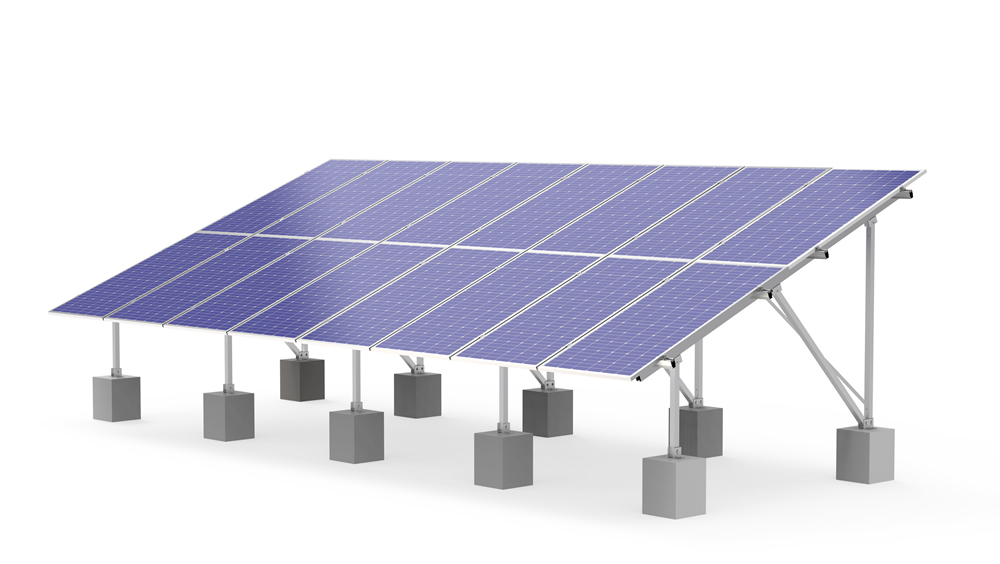
Ground mounted PV arrays can be classified into the following types based on mounting structure and tracking capability:
Fixed tilt mounting systems. This is the most basic configuration, in which PV panels are installed at a fixed angle (typically matched to the local latitude) facing toward the equator. With a simple structure, the lowest cost, and easy maintenance, this system is suitable for small to medium sized projects or scenarios with limited budgets.
Single axis tracking systems. The solar panels rotate around a horizontal axis, following the sun’s path from east to west. This system can increase annual power generation by 15% to 25%. Single axis tracking is further divided into two subtypes: horizontal single axis and inclined single axis; the former is suitable for low latitude regions, while the latter is suitable for medium to high latitude regions.
Dual axis tracking system. The solar panels rotate simultaneously around both horizontal and vertical axes, maintaining a perpendicular angle to the sun’s rays at all times. Power generation gains can reach 25% to 40%, but system complexity, initial investment, and maintenance costs also increase accordingly. This type of solution is typically used only for large scale projects or scenarios with high power generation requirements.
What Value Does It Bring?
The core value of
solar ground array lies in several aspects. First, high power generation efficiency. Unrestricted by roof orientation and slope, the panels can be precisely aligned toward the equator, with the tilt angle optimized for the local latitude, typically generating 10% to 25% more electricity than rooftop systems. Second, ease of maintenance. With all equipment at ground level, cleaning modules, inspecting wiring, and replacing parts are much safer and more convenient than working on rooftops, resulting in lower long term operation and maintenance costs. Third, strong scalability. When additional capacity is needed, expansion can be carried out directly adjacent to the existing array, eliminating concerns about remaining available space and structural load bearing capacity, unlike with rooftop systems. Fourth, superior heat dissipation. Ground mount array installation allows air to circulate freely beneath the modules, resulting in significant cooling. For every 1°C reduction in module operating temperature, conversion efficiency can increase by approximately 0.4% to 0.5%.
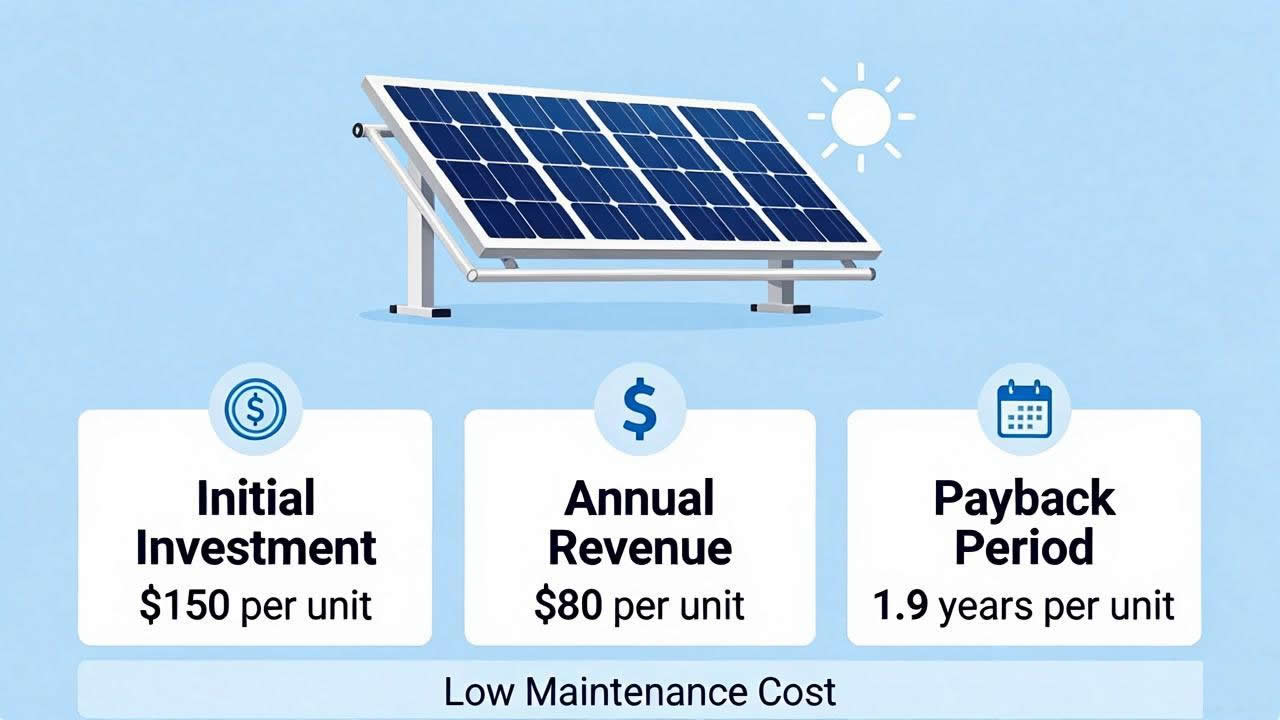
How to Optimize Layout for Maximum Efficiency
The layout design of a ground based solar array directly impacts land utilization, power generation, and return on investment. Optimizing the layout requires attention to the following key parameters.
Tilt angle and azimuth. The tilt angle for fixed mounts is typically set based on local latitude, but the true optimal tilt angle must be calculated using specialized software such as PVsyst in conjunction with local meteorological data. Azimuth is measured relative to true south (in the Northern Hemisphere); any deviation to the east or west results in a loss of irradiance.
Array spacing. The spacing between modules in front and rear rows must be sufficient to prevent the front row from casting shadows on the rear row between 9:00 a.m. and 3:00 p.m. on the winter solstice. Excessively wide spacing wastes land resources and increases the workload for cables, fencing, and other infrastructure; conversely, spacing that is too narrow can result in power generation losses and the risk of hot spots. In areas with ample land and low land prices, spacing can be appropriately increased to reduce shadowing losses, striking an optimal balance between power generation gains and land costs.
Module Orientation. Within a string, modules can be arranged horizontally or vertically. The advantage of horizontal orientation is that when the bottom of a module is shaded, it retains approximately two thirds of its power generation capacity due to the bypass diodes; in contrast, vertically oriented modules become virtually inoperative when shaded. Additionally, horizontal orientation results in a shorter northward shadow length, allowing for further reduction of the front to back spacing.
Special Considerations for Mountainous Terrain. For mountainous projects with significant variations in slope, a layout that “follows the natural contours of the terrain” is often preferable to forcibly leveling the site. This approach can significantly reduce earthwork, save on cable usage, and shorten array spacing. Although it sacrifices some of the irradiance achieved at the optimal tilt angle, the overall economic efficiency is actually better.
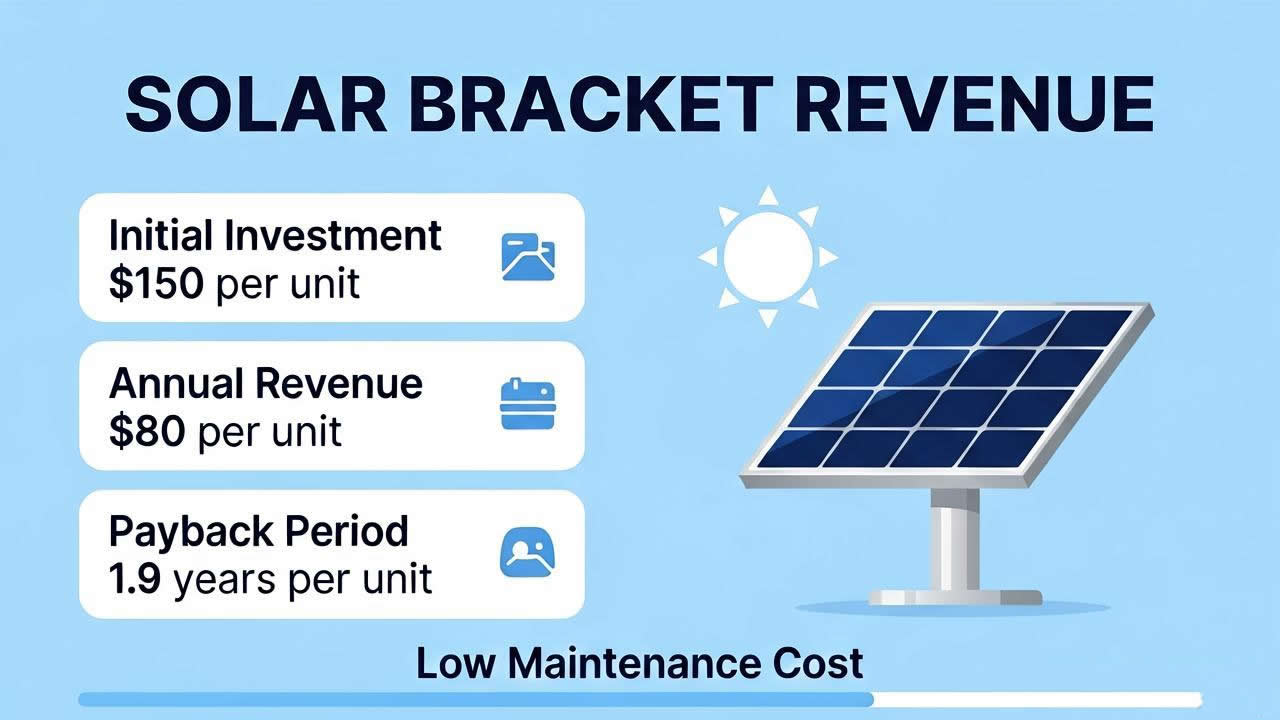
What to Consider for Maintenance?
Maintenance of
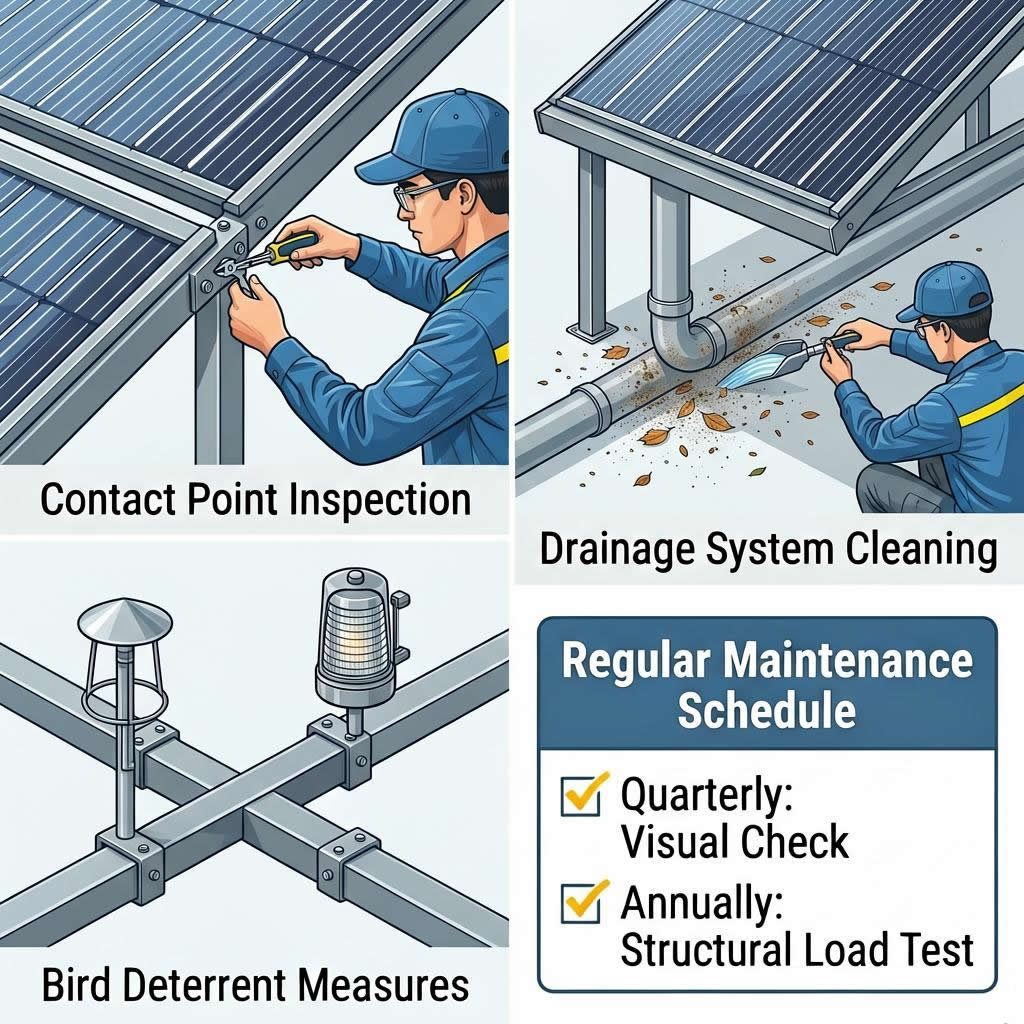
ground mounted pv array is relatively simple, but there are still some key points that require ongoing attention. First, keep the modules clean. Obstructions such as dust, bird droppings, and pollen can significantly reduce power generation efficiency; in dry, dusty areas, it is recommended to clean them once per quarter. Second, regularly inspect the mounting structures. Check for loose bolts, cracks in welds, and damage or rust on the galvanized coating; a comprehensive inspection is essential, especially after extreme wind events. Third, trim vegetation. Remove trees or shrubs that may shade the modules to prevent the hot spot effect. Fourth, monitor system performance. Track daily power generation via the inverter or data logger; if an abnormal drop in data is detected for a particular string, troubleshoot the issue promptly.
Summary
They significantly outperform rooftop systems in terms of power generation efficiency, O&M convenience, and scalability. Although they require more land and initial infrastructure investment, their higher power output and lower long term O&M costs result in an excellent return on investment over the entire lifecycle. The rationality of the layout design directly determines the project’s economic viability; optimizing parameters such as tilt angle, spacing, and azimuth requires striking the optimal balance between technical feasibility and economic viability.
5 Common Questions
Q1: Which is more cost effective—ground mounted arrays or rooftop arrays?
This depends on land costs and rooftop conditions. If the rooftop structure has sufficient load bearing capacity, is properly oriented, and is unobstructed, a rooftop system requires a lower initial investment. However, if rooftop space is limited, the orientation is suboptimal, or structural reinforcement is needed, ground mounted arrays—though requiring a higher upfront investment—often recoup the difference over the operational period due to higher power generation and lower O&M costs.
Q2: Is the extra electricity generated by tracking systems worth the price difference?
The cost of a single axis tracking system is about 30% to 40% higher than that of a fixed mounting system, but it increases power generation by 15% to 25%. In regions with abundant sunlight and high electricity prices, this investment usually pays off. However, in high latitude regions or areas with frequent cloudy or rainy weather, the additional costs and maintenance risks associated with dual axis tracking systems may not be cost effective, requiring a detailed comparison of the cost per kilowatt hour.
Q3: How much land area is required for a ground mounted array?
Approximately 8 to 12 square meters of land is needed per kilowatt of installed capacity, depending on the tilt angle, spacing, and whether fixed mounting or tracking systems are used. The higher the module efficiency and the tighter the spacing, the greater the installation density per unit area.
Q4: How long will a ground mounted array last?
Mounting systems are typically designed for a service life of over 25 years, matching that of the PV modules. The main structure is made of hot dip galvanized steel or aluminum alloy, and its corrosion resistance under normal environmental conditions can support use throughout the entire lifecycle. However, fasteners and grounding connection points require regular inspection; in coastal or industrial corrosive environments, it is recommended to use reinforced anti corrosion treatments.
Q5: What procedures are required to install a ground mounted array?
Typically, a building permit must be applied for from the local planning department. If the project involves forested land, agricultural land, or ecological conservation areas, additional approvals may be required. Approval cycles vary by region, ranging from a few weeks to several months; it is recommended to communicate thoroughly with local authorities before project initiation.
Choose Yiteng
Yiteng New Energy is a National High Tech Enterprise specializing in
PV mounting system solutions. The company’s business covers a wide range of applications, including fixed mounts, tracking systems, and agri solar and aquaculture solar integration, providing one stop services from site surveys and structural analysis to product supply and installation guidance. Yiteng holds more than 50 patented technologies, and its products are certified under the ISO 9001 quality management system. In 2022, the company received the industry honor of “Most Influential PV Mounting System Enterprise.” For ground mounted array projects, Yiteng has accumulated extensive practical experience in structural optimization, cost control, and construction guidance, making it a partner worth considering.


